Beginner's guide · Chapter 3 of 6
Where and when to look for mushrooms
Looking for mushrooms is not strolling around staring at the ground and hoping for luck. Every species has its forest and its moment, and learning to read both is what separates an empty basket from a good morning.
Every mushroom has its tree
Many of the most sought-after mushrooms live linked to the roots of particular trees: they give them water and minerals in exchange for sugars. That is why each one comes up in one kind of forest and not another:
- The saffron milk cap and the charbonnier, in pine woods.
- Porcini, in pine, beech, oak and chestnut woods.
- The chanterelle and the black trumpet, in damp beech and oak woods.
- The Caesar's mushroom, in warm chestnut, oak and holm oak woods.
- The gurumelo, among the rockroses and holm oaks of the south-west, in spring.
- The black truffle, underground, by holm oaks and oaks on limestone soils.
- The St George's mushroom, in meadows and at forest edges in spring, and the king oyster mushroom, in fields and waste ground by the field eryngo.
If you know which trees grow in a forest, you already know which mushrooms to expect there.
The rain and the wait
Mushrooms do not come up on the day it rains. It takes rain of the kind that soaks the ground, and then a wait: usually between one and three weeks, depending on the species and the weather. During those days the soil has to hold on to the moisture. If the sun comes out, a dry wind blows or it freezes, the flush fails and nothing ever shows.
That is why a summer storm is rarely enough, and a week of gentle rain followed by mild, damp days is usually the best news of the autumn.
Temperature, altitude and slope
In autumn, mushrooms wake up when the soil starts to cool. That is why they appear first in the mountains and move down towards the valleys over the weeks. In spring it is the other way round: first in the low, sunny areas, then higher up. North-facing slopes hold moisture better; south-facing ones dry out sooner, but warm up sooner in spring.
Reading the forest when you arrive
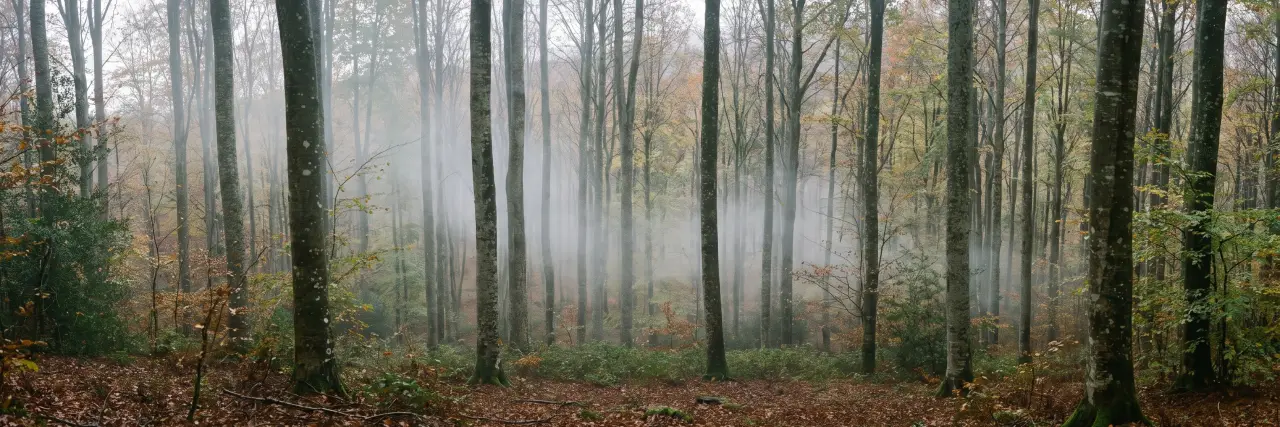
Look along the edges of tracks and in clearings, where some light gets in, among moss and in damp leaf litter. Move slowly and look to the sides too, not just in front of your feet. If you find one, look around: many come up in groups or in rings. And note down the good spots: mushrooms tend to return to the same place year after year.
Where micomapa helps
All this reckoning, rain, soil moisture, temperature, forest and each species' calendar, is exactly what the map does every night for every area of about five kilometres, fifteen days ahead. You pick the mushroom, move the day and see which areas light up. It is a forecast, not a promise: it tells you where it is worth going, and the rest is up to you.