Black trumpets (horn of plenty): where they grow now and when
Black, invisible in the leaf litter and delicious. Those who can see it would not swap it for anything.
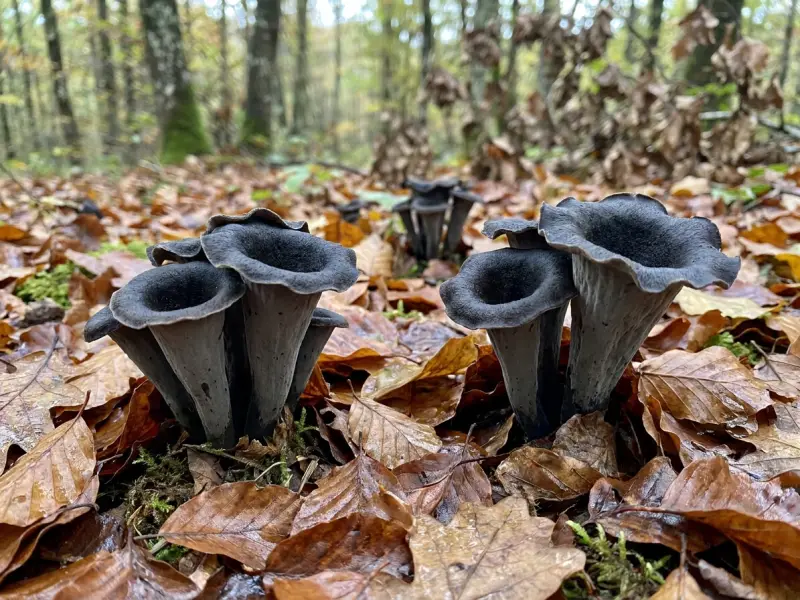
The black trumpet (Craterellus cornucopioides) comes out from September to December, at its best in October, in woods of beech, pedunculate oak, sessile oak, sweet chestnut, holm oak, downy oak and Portuguese oak, mostly in the middle mountains. It is also known as horn of plenty, trumpet of the dead.
See where it is ready this week
Right now, the best day forecast for black trumpets is 26 October.
The black trumpet hides in damp beech and oak woods, among the fallen leaves, and is as hard to see as it is easy to recognise. It comes up in the middle of autumn, when the forest has already had several rains and the ground is well soaked.
It needs more water than almost any other mushroom: one rain is not enough, it needs a whole autumn. That is why it lights up late on the map, and only in the areas where the moisture has really sunk in.
What it needs to come out
First, a generous rain, the kind that soaks down to the roots. Then patience: it usually appears after two or three weeks, as long as the soil holds on to that moisture and stays mild. If a frost, too much water or a drying wind comes in between, the flush is aborted and never shows.
Where to look
It comes out in woods of beech, pedunculate oak, sessile oak, sweet chestnut, holm oak, downy oak and Portuguese oak, mostly in the middle mountains, always on acid soils.
Black trumpets by province: Andalusia: Almería, Cádiz, Córdoba, Granada, Huelva, Jaén, Málaga, Sevilla · Aragon: Huesca, Teruel, Zaragoza · Asturias · Basque Country: Álava, Guipúzcoa, Vizcaya · Cantabria · Castile and León: Ávila, Burgos, León, Palencia, Salamanca, Segovia, Soria, Valladolid, Zamora · Castilla-La Mancha: Albacete, Ciudad Real, Cuenca, Guadalajara, Toledo · Catalonia: Barcelona, Girona, Lleida, Tarragona · Extremadura: Badajoz, Cáceres · Galicia: A Coruña, Lugo, Ourense, Pontevedra · Illes Balears · La Rioja · Madrid · Murcia · Navarra · Valencian Community: Alicante, Castellón, Valencia
Black trumpets season in Andalusia
Finding Black trumpets in Almería
In Almería we follow 25 zones with woodland for black trumpets, between 1,100 and 1,600 m above sea level. This week, its best day is 26 October. The zones with the best forecast lie near Berja, Fondón, Abla and Abrucena.
Black trumpets season in Cádiz
Cádiz has 41 zones with the woodland black trumpets need, from 250 to 850 m. The forecast points to 8 November as the best day of the week. The best placed are near El Bosque, Zahara, Grazalema and Cuevas del Becerro.
When to look for Black trumpets in Córdoba
We count 232 zones in Córdoba where black trumpets can come up, between 200 and 700 m. The best day this week is 28 October. It looks best near Zuheros, Carcabuey, Marmolejo and Cardeña.
Black trumpets in Granada: where and when
In Granada we follow 98 zones with woodland for black trumpets, between 1,050 and 1,600 m above sea level. This week, its best day is 27 October. The zones with the best forecast lie near Beas de Granada, Alhama de Granada, Alfarnate and Iznalloz.
Foraging for Black trumpets in Huelva
Huelva has 303 zones with the woodland black trumpets need, from 100 to 550 m. The forecast points to 26 October as the best day of the week. The best placed are near Aroche, Cabezas Rubias, Rosal de la Frontera and Cabeza la Vaca.
Black trumpets spots in Jaén
We count 218 zones in Jaén where black trumpets can come up, between 550 and 1,450 m. The best day this week is 28 October. It looks best near Frailes, Valdepeñas de Jaén, Fuensanta de Martos and Alcalá la Real.
Black trumpets in Málaga
In Málaga we follow 91 zones with woodland for black trumpets, between 400 and 1,100 m above sea level. This week, its best day is 6 November. The zones with the best forecast lie near Pujerra, Igualeja, Jubrique and Ronda.
Where to find Black trumpets in Sevilla
Sevilla has 172 zones with the woodland black trumpets need, from 100 to 600 m. The forecast points to 8 November as the best day of the week. The best placed are near Fuente del Arco, Malcocinado, Constantina and Villanueva del Río y Minas.
Where to find Black trumpets in Aragon
Finding Black trumpets in Huesca
We count 229 zones in Huesca where black trumpets can come up, between 700 and 1,500 m. The best day this week is 28 October. It looks best near Montanui, Alquézar, Echo and Bielsa.
Black trumpets season in Teruel
In Teruel we follow 205 zones with woodland for black trumpets, between 850 and 1,550 m above sea level. This week, its best day is 28 October. The zones with the best forecast lie near Vistabella del Maestrazgo, Villafranca del Cid, Beseit / Beceite and Peñarroya de Tastavíns.
When to look for Black trumpets in Zaragoza
Zaragoza has 86 zones with the woodland black trumpets need, from 650 to 1,150 m. The forecast points to 26 October as the best day of the week. The best placed are near Ansó, Berdún, Jaraba and Jarque.
Black trumpets in Asturias: where and when
We count 463 zones in Asturias where black trumpets can come up, between 100 and 1,200 m. The best day this week is 26 October. It looks best near Salas, Oseja de Sajambre, Sariego and Villademar.
Black trumpets in the Basque Country, province by province
Foraging for Black trumpets in Álava
In Álava we follow 114 zones with woodland for black trumpets, between 400 and 1,000 m above sea level. This week, its best day is 27 October. The zones with the best forecast lie near Olazagutía, Araia, Oñati and Lezama.
Black trumpets spots in Guipúzcoa
Guipúzcoa has 86 zones with the woodland black trumpets need, from 100 to 750 m. The forecast points to 26 October as the best day of the week. The best placed are near Berrobi, Leaburu, Altsasu and Araia.
Black trumpets in Vizcaya
We count 102 zones in Vizcaya where black trumpets can come up, between 50 and 550 m. The best day this week is 26 October. It looks best near Herriko Plaza, Zeanuri, Mañaria and Sopuerta.
Where to find Black trumpets in Cantabria
In Cantabria we follow 226 zones with woodland for black trumpets, between 100 and 1,150 m above sea level. This week, its best day is 26 October. The zones with the best forecast lie near Luzmela, San Vicente de la Barquera, Los Tojos and Alceda.
Black trumpets season in Castile and León
Finding Black trumpets in Ávila
Ávila has 222 zones with the woodland black trumpets need, from 650 to 1,400 m. The forecast points to 26 October as the best day of the week. The best placed are near Hoyos del Espino, Lanzahita, Madrigal de la Vera and Pelahustán.
Black trumpets season in Burgos
We count 276 zones in Burgos where black trumpets can come up, between 650 and 1,250 m. The best day this week is 26 October. It looks best near Villasana de Mena, Espinosa de los Monteros, Balmaseda and Villanueva de Valdegovía.
When to look for Black trumpets in León
In León we follow 365 zones with woodland for black trumpets, between 750 and 1,550 m above sea level. This week, its best day is 29 October. The zones with the best forecast lie near Oseja de Sajambre, Burón, Posada de Valdeón and Boca de Huérgano.
Black trumpets in Palencia: where and when
Palencia has 58 zones with the woodland black trumpets need, from 1,000 to 1,550 m. This week the woods are still asleep. Those with the most woodland are near Pesaguero-La Parte, Cervera de Pisuerga, Ruesga and Barruelo de Santullán.
Foraging for Black trumpets in Salamanca
We count 349 zones in Salamanca where black trumpets can come up, between 700 and 950 m. The best day this week is 26 October. It looks best near Cepeda, La Alberca, El Cabaco and Martiago.
Black trumpets spots in Segovia
In Segovia we follow 69 zones with woodland for black trumpets, between 900 and 1,500 m above sea level. This week, its best day is 26 October. The zones with the best forecast lie near Los Ángeles de San Rafael, Prádena, Torreiglesias and Riaza.
Black trumpets in Soria
Soria has 105 zones with the woodland black trumpets need, from 1,000 to 1,400 m. The forecast points to 27 October as the best day of the week. The best placed are near Olvega, Villoslada de Cameros, El Royo and Covaleda.
Where to find Black trumpets in Valladolid
We count 31 zones in Valladolid where black trumpets can come up, between 650 and 850 m. None is ready this week. The widest woods are near Villagarcía de Campos, Castromonte, Viana de Cega and Quintanilla de Onésimo.
Finding Black trumpets in Zamora
In Zamora we follow 227 zones with woodland for black trumpets, between 700 and 900 m above sea level. For now, no zone is ready. The zones with the most woodland lie near San Esteban de Nogales, Granja de Moreruela, Tábara and Santa Croya de Tera.
Where to find Black trumpets in Castilla-La Mancha
Black trumpets season in Albacete
Albacete has 70 zones with the woodland black trumpets need, from 950 to 1,550 m. The forecast points to 27 October as the best day of the week. The best placed are near Paterna del Madera, Villaverde de Guadalimar, Yeste and Molinicos.
When to look for Black trumpets in Ciudad Real
We count 228 zones in Ciudad Real where black trumpets can come up, between 550 and 900 m. The best day this week is 28 October. It looks best near Villanueva de San Carlos, Aldea del Rey, Pozuelo de Calatrava and Argamasilla de Calatrava.
Black trumpets in Cuenca: where and when
In Cuenca we follow 172 zones with woodland for black trumpets, between 950 and 1,350 m above sea level. This week, its best day is 28 October. The zones with the best forecast lie near Chillarón de Cuenca, Carboneras de Guadazaón, Fuentes and Cañada del Hoyo.
Foraging for Black trumpets in Guadalajara
Guadalajara has 229 zones with the woodland black trumpets need, from 900 to 1,400 m. The forecast points to 26 October as the best day of the week. The best placed are near Pareja, Trillo, Uceda and Cogolludo.
Black trumpets spots in Toledo
We count 195 zones in Toledo where black trumpets can come up, between 400 and 950 m. The best day this week is 26 October. It looks best near La Iglesuela del Tiétar, Mohedas de la Jara, Almendral de la Cañada and Buenaventura.
Black trumpets in Catalonia, province by province
Black trumpets in Barcelona
In Barcelona we follow 211 zones with woodland for black trumpets, between 150 and 1,000 m above sea level. This week, its best day is 26 October. The zones with the best forecast lie near Vilanova de Sau, L'Esquirol, Montseny and Gualba de Dalt.
Where to find Black trumpets in Girona
Girona has 200 zones with the woodland black trumpets need, from 100 to 1,200 m. The forecast points to 26 October as the best day of the week. The best placed are near Osor, les Planes d'Hostoles, Viladrau and Montseny.
Finding Black trumpets in Lleida
We count 182 zones in Lleida where black trumpets can come up, between 700 and 1,550 m. The best day this week is 28 October. It looks best near el Pont de Suert, La Seu d'Urgell, Sort and Àger.
Black trumpets season in Tarragona
In Tarragona we follow 56 zones with woodland for black trumpets, between 350 and 1,000 m above sea level. This week, its best day is 28 October. The zones with the best forecast lie near Montblanc, Vimbodí, La Riba and Vilaplana.
Black trumpets season in Extremadura
When to look for Black trumpets in Badajoz
Badajoz has 351 zones with the woodland black trumpets need, from 250 to 650 m. The forecast points to 27 October as the best day of the week. The best placed are near Valle de Matamoros, Fuente del Arco, Oliva de la Frontera and Puebla del Maestre.
Black trumpets in Cáceres: where and when
We count 433 zones in Cáceres where black trumpets can come up, between 300 and 850 m. The best day this week is 26 October. It looks best near Robledillo de Trujillo, Aliseda, Hernán-Pérez and Palomero.
Where to find Black trumpets in Galicia
Foraging for Black trumpets in A Coruña
In A Coruña we follow 321 zones with woodland for black trumpets, between 50 and 450 m above sea level. This week, its best day is 26 October. The zones with the best forecast lie near Carral, Santa Marta de Ortigueira, Abegondo and Culleredo.
Black trumpets spots in Lugo
Lugo has 400 zones with the woodland black trumpets need, from 350 to 900 m. The forecast points to 26 October as the best day of the week. The best placed are near Petín, Navia de Suarna, Pobra de Trives and Lobios.
Black trumpets in Ourense
We count 220 zones in Ourense where black trumpets can come up, between 350 and 1,150 m. The best day this week is 26 October. It looks best near Pobra de Trives, Manzaneda, Castro Caldelas and Lobios.
Where to find Black trumpets in Pontevedra
In Pontevedra we follow 185 zones with woodland for black trumpets, between 50 and 650 m above sea level. For now, no zone is ready. The zones with the most woodland lie near Silleda, Melón, Avión and Monterroso.
Finding Black trumpets in Illes Balears
Illes Balears has 109 zones with the woodland black trumpets need, from 50 to 450 m. The forecast points to 1 November as the best day of the week. The best placed are near Campanet, Sóller, Mancor de la Vall and Pollença.
Black trumpets season in La Rioja
We count 112 zones in La Rioja where black trumpets can come up, between 750 and 1,450 m. The best day this week is 26 October. It looks best near Villoslada de Cameros, San Millán de la Cogolla, Ezcaray and Anguiano.
When to look for Black trumpets in Madrid
In Madrid we follow 107 zones with woodland for black trumpets, between 600 and 1,300 m above sea level. This week, its best day is 26 October. The zones with the best forecast lie near Zarzalejo, El Escorial, El Berrueco and Pedrezuela.
Black trumpets in Murcia: where and when
Murcia has 12 zones with the woodland black trumpets need, from 1,050 to 1,450 m. The forecast points to 26 October as the best day of the week. The best placed are near Moratalla, Vélez-Blanco, Nerpio and Socovos.
Foraging for Black trumpets in Navarra
We count 242 zones in Navarra where black trumpets can come up, between 450 and 1,150 m. The best day this week is 27 October. It looks best near Latsaga, Goizueta, Betelu and Irurita.
Black trumpets in the Valencian Community, province by province
Black trumpets spots in Alicante
In Alicante we follow 12 zones with woodland for black trumpets, between 850 and 1,100 m above sea level. For now, no zone is ready. The zones with the most woodland lie near Alcoy, Agres, Penáguila and La Torre de les Maçanes.
Black trumpets in Castellón
Castellón has 93 zones with the woodland black trumpets need, from 650 to 1,200 m. The forecast points to 28 October as the best day of the week. The best placed are near Catí, Chert/Xert, Cinctorres and Morella.
Where to find Black trumpets in Valencia
We count 46 zones in Valencia where black trumpets can come up, between 650 and 1,050 m. The best day this week is 26 October. It looks best near Tuéjar, Siete Aguas, Chera and Utiel.
How the forest is doing this week
- Asleep 8233 zones
- Low 291 zones
- Medium 54 zones
- High 1 zones
Forecast of 26 October, updated every day.
Mushrooms that share its woods
- Bronze bolete: The bolete of the holm oak woods: dark, stout and firm-fleshed. The most prized of its family.
- Sweet chestnut: Autumn's fruit in the groves of the north and the mountains of the south. It falls on its own, and every valley has its week.
- Caesar's mushroom: The queen. Orange as a golden egg, scarce and ever more sought after.
- Chanterelle: Yellow, fragrant and loyal: once it finds its corner, it comes back every year.
- March mushroom: The one that comes up under the retreating snow. Cold, hidden and among the most sought after of the year.