Chanterelles (Cantharellus cibarius): where and when they grow
Yellow, fragrant and loyal: once it finds its corner, it comes back every year.
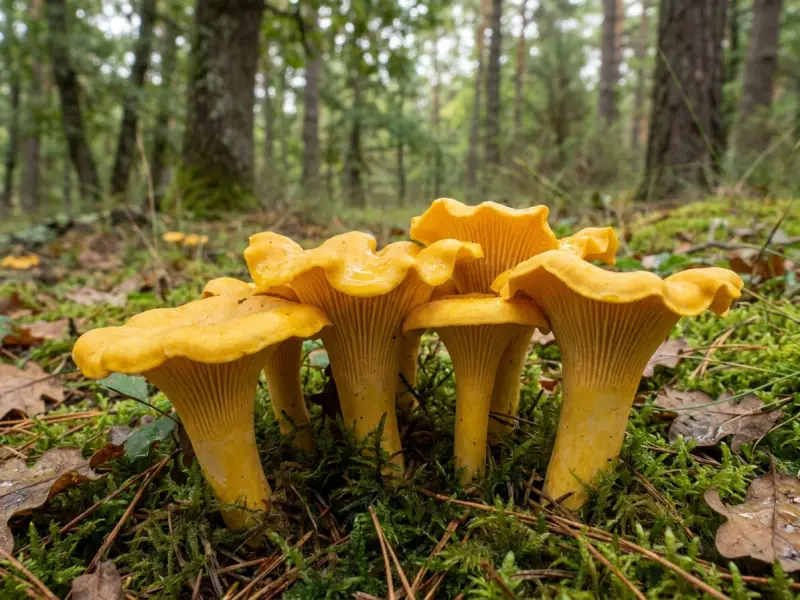
The chanterelle (Cantharellus cibarius) comes out from June to November, at its best in September, in woods of pedunculate oak, sessile oak, Pyrenean oak, sweet chestnut, beech, holm oak, cork oak and downy oak, and also among Scots pine and maritime pine, from low ground up to the middle mountains. It is also known as girolle, golden chanterelle.
See where it is ready this week
Right now, the best day forecast for chanterelles is 26 October.
The chanterelle lives in oak, chestnut and beech woods on acid soil, from the Cantabrian coast to the Pyrenees and across the humid mountains. It has the longest season of the good mushrooms: in a rainy year it comes up from June and holds on until the frosts arrive.
It likes steady moisture more than a downpour, which is why the map watches that the ground does not dry out after the rain. If you find one, look around: it rarely grows alone.
What it needs to come out
First, a good rain, the kind that soaks the ground. Then patience: it usually appears one or two weeks later, as long as the soil holds on to that moisture and stays mild. If a frost, too much water or a drying wind comes in between, the flush is aborted and never shows.
Where to look
It comes out in woods of pedunculate oak, sessile oak, Pyrenean oak, sweet chestnut, beech, holm oak, cork oak and downy oak, and also among Scots pine and maritime pine, from low ground up to the middle mountains, always on acid soils.
Chanterelles by province: Andalusia: Almería, Cádiz, Córdoba, Granada, Huelva, Jaén, Málaga, Sevilla · Aragon: Huesca, Teruel, Zaragoza · Asturias · Basque Country: Álava, Guipúzcoa, Vizcaya · Cantabria · Castile and León: Ávila, Burgos, León, Palencia, Salamanca, Segovia, Soria, Valladolid, Zamora · Castilla-La Mancha: Albacete, Ciudad Real, Cuenca, Guadalajara, Toledo · Catalonia: Barcelona, Girona, Lleida, Tarragona · Extremadura: Badajoz, Cáceres · Galicia: A Coruña, Lugo, Ourense, Pontevedra · Illes Balears · La Rioja · Madrid · Murcia · Navarra · Valencian Community: Alicante, Castellón, Valencia
Where to find Chanterelles in Andalusia
When to look for Chanterelles in Almería
Almería has 45 zones with the woodland chanterelles need, from 1,150 to 1,850 m. The forecast points to 26 October as the best day of the week. The best placed are near Abrucena, Ohanes, Bacarés and Paterna del Río.
Chanterelles in Cádiz: where and when
We count 163 zones in Cádiz where chanterelles can come up, between 50 and 650 m. The best day this week is 26 October. It looks best near Los Barrios, Algeciras, Castellar de la Frontera and Jimena de la Frontera.
Foraging for Chanterelles in Córdoba
In Córdoba we follow 232 zones with woodland for chanterelles, between 200 and 700 m above sea level. This week, its best day is 26 October. The zones with the best forecast lie near Zuheros, Marmolejo, Cardeña and Carcabuey.
Chanterelles spots in Granada
Granada has 140 zones with the woodland chanterelles need, from 1,000 to 1,900 m. The forecast points to 5 November as the best day of the week. The best placed are near Lanteira, Beas de Granada, Huétor Santillán and Aldeire.
Chanterelles in Huelva
We count 331 zones in Huelva where chanterelles can come up, between 50 and 500 m. The best day this week is 26 October. It looks best near Aroche, Jabugo, Rosal de la Frontera and Cabezas Rubias.
Where to find Chanterelles in Jaén
In Jaén we follow 222 zones with woodland for chanterelles, between 550 and 1,450 m above sea level. This week, its best day is 26 October. The zones with the best forecast lie near Valdepeñas de Jaén, Segura de la Sierra, Frailes and Villaverde de Guadalimar.
Finding Chanterelles in Málaga
Málaga has 135 zones with the woodland chanterelles need, from 200 to 1,050 m. The forecast points to 6 November as the best day of the week. The best placed are near Jubrique, Pujerra, Benahavís and Igualeja.
Chanterelles season in Sevilla
We count 173 zones in Sevilla where chanterelles can come up, between 100 and 600 m. The best day this week is 27 October. It looks best near Fuente del Arco, Malcocinado, Constantina and Puebla del Maestre.
Chanterelles in Aragon, province by province
When to look for Chanterelles in Huesca
In Huesca we follow 313 zones with woodland for chanterelles, between 750 and 1,900 m above sea level. This week, its best day is 26 October. The zones with the best forecast lie near Torla, Ansó, Montanui and Jaca.
Chanterelles in Teruel: where and when
Teruel has 284 zones with the woodland chanterelles need, from 950 to 1,600 m. The forecast points to 26 October as the best day of the week. The best placed are near Alcalá de la Selva, Beseit / Beceite, Villafranca del Cid and Peñarroya de Tastavíns.
Foraging for Chanterelles in Zaragoza
We count 92 zones in Zaragoza where chanterelles can come up, between 650 and 1,150 m. The best day this week is 27 October. It looks best near Ansó, Vera de Moncayo, Luesia and Aniñon.
Chanterelles spots in Asturias
In Asturias we follow 471 zones with woodland for chanterelles, between 100 and 1,250 m above sea level. This week, its best day is 26 October. The zones with the best forecast lie near Sariego, Salas, Pola de Somiedo and Vilaión.
Chanterelles season in the Basque Country
Chanterelles in Álava
Álava has 114 zones with the woodland chanterelles need, from 400 to 1,000 m. The forecast points to 26 October as the best day of the week. The best placed are near Eskoriatza, Amurrio, Laudio / Llodio and Olazagutía.
Where to find Chanterelles in Guipúzcoa
We count 86 zones in Guipúzcoa where chanterelles can come up, between 100 and 750 m. The best day this week is 26 October. It looks best near Berrobi, Legorreta, Leaburu and Zumarraga.
Finding Chanterelles in Vizcaya
In Vizcaya we follow 102 zones with woodland for chanterelles, between 50 and 550 m above sea level. This week, its best day is 26 October. The zones with the best forecast lie near Sopuerta, Herriko Plaza, San Pedro Galdames and Zeanuri.
Chanterelles season in Cantabria
Cantabria has 230 zones with the woodland chanterelles need, from 100 to 1,200 m. The forecast points to 26 October as the best day of the week. The best placed are near San Vicente de la Barquera, Luzmela, Alceda and Ruente.
Where to find Chanterelles in Castile and León
When to look for Chanterelles in Ávila
We count 251 zones in Ávila where chanterelles can come up, between 700 and 1,450 m. The best day this week is 26 October. It looks best near Guisando, Pedro Bernardo, El Hornillo and Mijares.
Chanterelles in Burgos: where and when
In Burgos we follow 309 zones with woodland for chanterelles, between 650 and 1,250 m above sea level. This week, its best day is 26 October. The zones with the best forecast lie near Villasana de Mena, Espinosa de los Monteros, Balmaseda and Regumiel de la Sierra.
Foraging for Chanterelles in León
León has 593 zones with the woodland chanterelles need, from 750 to 1,550 m. The forecast points to 28 October as the best day of the week. The best placed are near Oseja de Sajambre, Burón, Posada de Valdeón and Benuza.
Chanterelles spots in Palencia
We count 142 zones in Palencia where chanterelles can come up, between 900 and 1,500 m. The best day this week is 28 October. It looks best near Buenavista de Valdavia, Mataporquera, Alar del Rey and Barruelo de Santullán.
Chanterelles in Salamanca
In Salamanca we follow 371 zones with woodland for chanterelles, between 700 and 1,000 m above sea level. This week, its best day is 26 October. The zones with the best forecast lie near La Alberca, Cepeda, Peñaparda and Robleda.
Where to find Chanterelles in Segovia
Segovia has 148 zones with the woodland chanterelles need, from 800 to 1,500 m. The forecast points to 26 October as the best day of the week. The best placed are near Los Ángeles de San Rafael, Lozoya, Guadarrama and Navacerrada.
Finding Chanterelles in Soria
We count 159 zones in Soria where chanterelles can come up, between 1,050 and 1,450 m. The best day this week is 26 October. It looks best near Vinuesa, El Royo, Abejar and Cabrejas del Pinar.
Chanterelles season in Valladolid
In Valladolid we follow 62 zones with woodland for chanterelles, between 700 and 850 m above sea level. This week, its best day is 26 October. The zones with the best forecast lie near Olmedo, Pozal de Gallinas, Alcazarén and Torrecilla de la Abadesa.
When to look for Chanterelles in Zamora
Zamora has 291 zones with the woodland chanterelles need, from 700 to 1,050 m. The forecast points to 26 October as the best day of the week. The best placed are near Ferreras de Arriba, Villardeciervos, San Vicente de la Cabeza and Mahide.
Chanterelles in Castilla-La Mancha, province by province
Chanterelles in Albacete: where and when
We count 71 zones in Albacete where chanterelles can come up, between 950 and 1,550 m. The best day this week is 6 November. It looks best near Villaverde de Guadalimar, Paterna del Madera, Yeste and Riópar.
Foraging for Chanterelles in Ciudad Real
In Ciudad Real we follow 245 zones with woodland for chanterelles, between 550 and 900 m above sea level. This week, its best day is 8 November. The zones with the best forecast lie near Viso del Marqués, Villanueva de San Carlos, Retuerta de Bullaque and Aldea del Rey.
Chanterelles spots in Cuenca
Cuenca has 223 zones with the woodland chanterelles need, from 950 to 1,450 m. The forecast points to 5 November as the best day of the week. The best placed are near Cañete, Mariana, Chillarón de Cuenca and Las Majadas.
Chanterelles in Guadalajara
We count 271 zones in Guadalajara where chanterelles can come up, between 900 and 1,500 m. The best day this week is 26 October. It looks best near Cogolludo, Patones, Pareja and Uceda.
Where to find Chanterelles in Toledo
In Toledo we follow 200 zones with woodland for chanterelles, between 400 and 950 m above sea level. This week, its best day is 26 October. The zones with the best forecast lie near Espinoso del Rey, Robledo del Mazo, Navas de Estena and La Iglesuela del Tiétar.
Chanterelles season in Catalonia
Finding Chanterelles in Barcelona
Barcelona has 220 zones with the woodland chanterelles need, from 150 to 1,100 m. The forecast points to 26 October as the best day of the week. The best placed are near Vilanova de Sau, Gualba de Dalt, Campins and Vallgorguina.
Chanterelles season in Girona
We count 217 zones in Girona where chanterelles can come up, between 100 and 1,350 m. The best day this week is 26 October. It looks best near Osor, Montseny, Viladrau and Santa Coloma de Farners.
When to look for Chanterelles in Lleida
In Lleida we follow 243 zones with woodland for chanterelles, between 700 and 2,050 m above sea level. This week, its best day is 31 October. The zones with the best forecast lie near Llavorsí, Barruera, el Pont de Suert and La Seu d'Urgell.
Chanterelles in Tarragona: where and when
Tarragona has 57 zones with the woodland chanterelles need, from 300 to 1,000 m. The forecast points to 26 October as the best day of the week. The best placed are near Vimbodí, Beseit / Beceite, Mas de Barberans and Montblanc.
Where to find Chanterelles in Extremadura
Foraging for Chanterelles in Badajoz
We count 354 zones in Badajoz where chanterelles can come up, between 250 and 650 m. The best day this week is 26 October. It looks best near Valle de Matamoros, Higuera de Vargas, Oliva de la Frontera and Zahinos.
Chanterelles spots in Cáceres
In Cáceres we follow 466 zones with woodland for chanterelles, between 300 and 850 m above sea level. This week, its best day is 26 October. The zones with the best forecast lie near Torrecilla de los Ángeles, Pinofranqueado, Cadalso and Robleda.
Chanterelles in Galicia, province by province
Chanterelles in A Coruña
A Coruña has 330 zones with the woodland chanterelles need, from 50 to 450 m. The forecast points to 26 October as the best day of the week. The best placed are near Carral, Santa Marta de Ortigueira, Abegondo and Outes.
Where to find Chanterelles in Lugo
We count 411 zones in Lugo where chanterelles can come up, between 350 and 900 m. The best day this week is 26 October. It looks best near Pobra de Trives, Petín, Lobios and Tormaleo.
Finding Chanterelles in Ourense
In Ourense we follow 285 zones with woodland for chanterelles, between 350 and 1,150 m above sea level. This week, its best day is 26 October. The zones with the best forecast lie near Arnuíde, Pobra de Trives, Lubián and Puente de Domingo Flórez.
Chanterelles season in Pontevedra
Pontevedra has 187 zones with the woodland chanterelles need, from 50 to 650 m. The forecast points to 26 October as the best day of the week. The best placed are near Mondariz-Balneario, Redondela, Lama and Fornelos de Montes.
When to look for Chanterelles in Illes Balears
We count 110 zones in Illes Balears where chanterelles can come up, between 50 and 450 m. The best day this week is 26 October. It looks best near Campanet, Sóller, Mancor de la Vall and Pollença.
Chanterelles in La Rioja: where and when
In La Rioja we follow 120 zones with woodland for chanterelles, between 750 and 1,600 m above sea level. This week, its best day is 26 October. The zones with the best forecast lie near Villoslada de Cameros, Ezcaray, Grañón and Belorado.
Foraging for Chanterelles in Madrid
Madrid has 132 zones with the woodland chanterelles need, from 600 to 1,600 m. The forecast points to 26 October as the best day of the week. The best placed are near Miraflores de la Sierra, San Lorenzo de El Escorial, Guadarrama and Bustarviejo.
Chanterelles spots in Murcia
We count 14 zones in Murcia where chanterelles can come up, between 1,050 and 1,450 m. The best day this week is 7 November. It looks best near Moratalla, Vélez-Blanco, Aledo and Nerpio.
Chanterelles in Navarra
In Navarra we follow 243 zones with woodland for chanterelles, between 450 and 1,150 m above sea level. This week, its best day is 28 October. The zones with the best forecast lie near Betelu, Isaba, Latsaga and Irurita.
Chanterelles season in the Valencian Community
Where to find Chanterelles in Alicante
Alicante has 12 zones with the woodland chanterelles need, from 850 to 1,100 m. This week the woods are still asleep. Those with the most woodland are near Agres, Alcoy, Penáguila and La Torre de les Maçanes.
Finding Chanterelles in Castellón
We count 97 zones in Castellón where chanterelles can come up, between 650 and 1,200 m. The best day this week is 28 October. It looks best near Vistabella del Maestrazgo, Catí, Rosell and Eslida.
Chanterelles season in Valencia
In Valencia we follow 68 zones with woodland for chanterelles, between 650 and 1,100 m above sea level. This week, its best day is 26 October. The zones with the best forecast lie near Bicorp, Teresa de Cofrentes, Chera and Tuéjar.
How the forest is doing this week
- Asleep 9334 zones
- Low 558 zones
- Medium 127 zones
- High 16 zones
Forecast of 26 October, updated every day.
Mushrooms that share its woods
- Bronze bolete: The bolete of the holm oak woods: dark, stout and firm-fleshed. The most prized of its family.
- Sweet chestnut: Autumn's fruit in the groves of the north and the mountains of the south. It falls on its own, and every valley has its week.
- Caesar's mushroom: The queen. Orange as a golden egg, scarce and ever more sought after.
- March mushroom: The one that comes up under the retreating snow. Cold, hidden and among the most sought after of the year.
- Black trumpet: Black, invisible in the leaf litter and delicious. Those who can see it would not swap it for anything.