Bronze bolete (Boletus aereus): where and when it grows
The bolete of the holm oak woods: dark, stout and firm-fleshed. The most prized of its family.
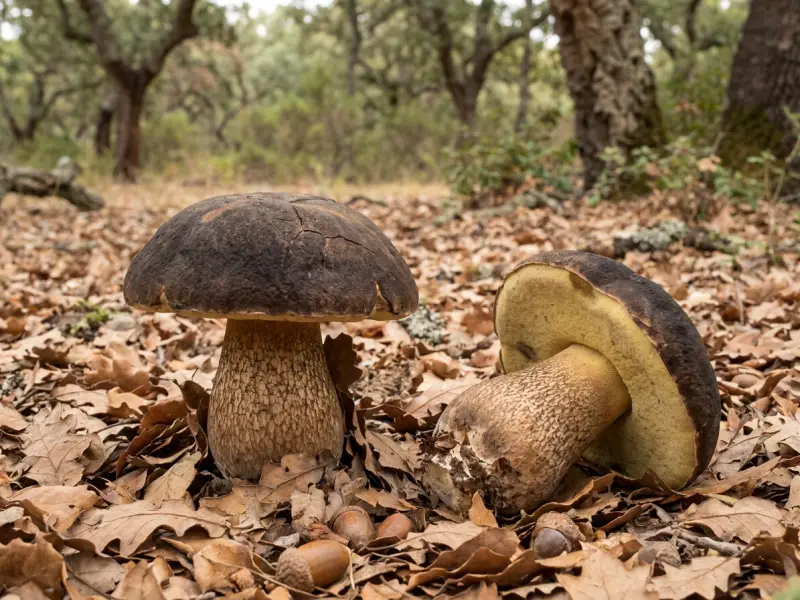
The bronze bolete (Boletus aereus) comes out from August to November, at its best in October, and sometimes also in summer, in woods of holm oak, cork oak, Pyrenean oak, sweet chestnut, sessile oak, pedunculate oak, downy oak, Portuguese oak and beech, from low ground up to the middle mountains. It is also known as dark cep, queen bolete.
See where it is ready this week
Right now, the best day forecast for bronze boletes is 26 October.
The bronze bolete is the southern cousin of the porcini. Where that one wants cool pine woods, this one looks for holm oak, cork oak and chestnut woods on acid soil and in a warm climate, from the west to the south of the peninsula. It comes up earlier, with the late-summer rains, and is the most appreciated in the kitchen.
Like Caesar's mushroom, it is a warm-soil mushroom: a rainy September with the ground still mild is its moment. An early cold takes it away.
What it needs to come out
First, a generous rain, the kind that soaks down to the roots. Then patience: it usually appears after two or three weeks, as long as the soil holds on to that moisture and stays warm, with the summer heat still in it. If a frost, too much water or a drying wind comes in between, the flush is aborted and never shows.
Where to look
It comes out in woods of holm oak, cork oak, Pyrenean oak, sweet chestnut, sessile oak, pedunculate oak, downy oak, Portuguese oak and beech, from low ground up to the middle mountains, always on acid soils.
Bronze boletes by province: Andalusia: Almería, Cádiz, Córdoba, Granada, Huelva, Jaén, Málaga, Sevilla · Aragon: Huesca, Teruel, Zaragoza · Asturias · Basque Country: Álava, Guipúzcoa, Vizcaya · Cantabria · Castile and León: Ávila, Burgos, León, Palencia, Salamanca, Segovia, Soria, Valladolid, Zamora · Castilla-La Mancha: Albacete, Ciudad Real, Cuenca, Guadalajara, Toledo · Catalonia: Barcelona, Girona, Lleida, Tarragona · Extremadura: Badajoz, Cáceres · Galicia: A Coruña, Lugo, Ourense, Pontevedra · Illes Balears · La Rioja · Madrid · Murcia · Navarra · Valencian Community: Alicante, Castellón, Valencia
Bronze boletes season in Andalusia
Bronze boletes spots in Almería
In Almería we follow 26 zones with woodland for bronze boletes, between 1,100 and 1,450 m above sea level. For now, no zone is ready. The zones with the most woodland lie near Huéneja, Senes, Paterna del Río and Sierro.
Bronze boletes in Cádiz
Cádiz has 137 zones with the woodland bronze boletes need, from 50 to 700 m. The forecast points to 4 November as the best day of the week. The best placed are near Los Barrios, Algeciras, Tarifa and Castellar de la Frontera.
Where to find Bronze boletes in Córdoba
We count 237 zones in Córdoba where bronze boletes can come up, between 200 and 700 m. The best day this week is 26 October. It looks best near Villarrubia, Córdoba, Villaviciosa de Córdoba and Marmolejo.
Finding Bronze boletes in Granada
In Granada we follow 94 zones with woodland for bronze boletes, between 850 and 1,400 m above sea level. This week, its best day is 31 October. The zones with the best forecast lie near Illora, Alhama de Granada, Alcaucín and Escúzar.
Bronze boletes season in Huelva
Huelva has 306 zones with the woodland bronze boletes need, from 100 to 550 m. The forecast points to 26 October as the best day of the week. The best placed are near Aroche, Cabezas Rubias, Rosal de la Frontera and Jabugo.
When to look for Bronze boletes in Jaén
We count 226 zones in Jaén where bronze boletes can come up, between 500 and 1,300 m. The best day this week is 1 November. It looks best near Marmolejo, Andújar, Valdepeñas de Jaén and Santa Elena.
Bronze boletes in Málaga: where and when
In Málaga we follow 115 zones with woodland for bronze boletes, between 250 and 1,000 m above sea level. This week, its best day is 31 October. The zones with the best forecast lie near Pujerra, Igualeja, Jubrique and Montejaque.
Foraging for Bronze boletes in Sevilla
Sevilla has 167 zones with the woodland bronze boletes need, from 150 to 650 m. The forecast points to 1 November as the best day of the week. The best placed are near Malcocinado, Fuente del Arco, Constantina and Puebla del Maestre.
Where to find Bronze boletes in Aragon
Bronze boletes spots in Huesca
We count 220 zones in Huesca where bronze boletes can come up, between 650 and 1,350 m. The best day this week is 26 October. It looks best near Torla, Montanui, el Pont de Suert and Benavarri / Benabarre.
Bronze boletes in Teruel
In Teruel we follow 198 zones with woodland for bronze boletes, between 800 and 1,400 m above sea level. This week, its best day is 1 November. The zones with the best forecast lie near Peñarroya de Tastavíns, Beseit / Beceite, Manzanera and Rubielos de Mora.
Where to find Bronze boletes in Zaragoza
Zaragoza has 116 zones with the woodland bronze boletes need, from 650 to 1,100 m. The forecast points to 27 October as the best day of the week. The best placed are near Jarque, Vera de Moncayo, Torrijo de la Cañada and Villanueva del Huerva.
Finding Bronze boletes in Asturias
We count 432 zones in Asturias where bronze boletes can come up, between 150 and 1,100 m. The best day this week is 26 October. It looks best near Salas, Villademar, Vilaión and Caravia.
Bronze boletes in the Basque Country, province by province
Bronze boletes season in Álava
In Álava we follow 119 zones with woodland for bronze boletes, between 400 and 1,000 m above sea level. This week, its best day is 26 October. The zones with the best forecast lie near Laudio / Llodio, Eskoriatza, Lezama and Amurrio.
When to look for Bronze boletes in Guipúzcoa
Guipúzcoa has 80 zones with the woodland bronze boletes need, from 150 to 800 m. The forecast points to 26 October as the best day of the week. The best placed are near Zumarraga, Azkoitia, Bergara and Beasain.
Bronze boletes in Vizcaya: where and when
We count 94 zones in Vizcaya where bronze boletes can come up, between 100 and 550 m. The best day this week is 28 October. It looks best near Sopuerta, Ortuella, San Pedro Galdames and Mañaria.
Foraging for Bronze boletes in Cantabria
In Cantabria we follow 209 zones with woodland for bronze boletes, between 100 and 1,100 m above sea level. This week, its best day is 26 October. The zones with the best forecast lie near Barrio de la Iglesia, San Vicente de la Barquera, Potes and Ruente.
Bronze boletes season in Castile and León
Bronze boletes spots in Ávila
Ávila has 212 zones with the woodland bronze boletes need, from 650 to 1,350 m. The forecast points to 26 October as the best day of the week. The best placed are near Madrigal de la Vera, Lanzahita, Candeleda and Pelahustán.
Bronze boletes in Burgos
We count 326 zones in Burgos where bronze boletes can come up, between 650 and 1,200 m. The best day this week is 26 October. It looks best near Villasana de Mena, Balmaseda, Espinosa de los Monteros and Pradoluengo.
Where to find Bronze boletes in León
In León we follow 506 zones with woodland for bronze boletes, between 750 and 1,350 m above sea level. This week, its best day is 28 October. The zones with the best forecast lie near Oseja de Sajambre, Puente de Domingo Flórez, Benuza and Bembibre.
Finding Bronze boletes in Palencia
Palencia has 129 zones with the woodland bronze boletes need, from 900 to 1,300 m. This week the woods are still asleep. Those with the most woodland are near Cervera de Pisuerga, Valderrueda, Ruesga and Pesaguero-La Parte.
Bronze boletes season in Salamanca
We count 368 zones in Salamanca where bronze boletes can come up, between 700 and 1,000 m. The best day this week is 26 October. It looks best near Cepeda, Peñaparda, Béjar and Martiago.
When to look for Bronze boletes in Segovia
In Segovia we follow 91 zones with woodland for bronze boletes, between 900 and 1,250 m above sea level. This week, its best day is 26 October. The zones with the best forecast lie near Sanchidrián, Prádena, Ayllón and Torreiglesias.
Bronze boletes in Soria: where and when
Soria has 172 zones with the woodland bronze boletes need, from 1,000 to 1,350 m. The forecast points to 26 October as the best day of the week. The best placed are near Vinuesa, San Pedro Manrique, Borobia and Cabrejas del Pinar.
Foraging for Bronze boletes in Valladolid
We count 44 zones in Valladolid where bronze boletes can come up, between 650 and 850 m. None is ready this week. The widest woods are near Villagarcía de Campos, Castromonte, Viana de Cega and Quintanilla de Onésimo.
Bronze boletes spots in Zamora
In Zamora we follow 278 zones with woodland for bronze boletes, between 700 and 1,000 m above sea level. This week, its best day is 5 November. The zones with the best forecast lie near Galende, Cobreros, Olmillos de Castro and Ayoó de Vidriales.
Where to find Bronze boletes in Castilla-La Mancha
Bronze boletes in Albacete
Albacete has 74 zones with the woodland bronze boletes need, from 900 to 1,400 m. The forecast points to 31 October as the best day of the week. The best placed are near Nerpio, Yeste, Riópar and Paterna del Madera.
Where to find Bronze boletes in Ciudad Real
We count 232 zones in Ciudad Real where bronze boletes can come up, between 550 and 900 m. The best day this week is 26 October. It looks best near Conquista, Torrecampo, Saceruela and Alcoba.
Finding Bronze boletes in Cuenca
In Cuenca we follow 198 zones with woodland for bronze boletes, between 950 and 1,300 m above sea level. This week, its best day is 26 October. The zones with the best forecast lie near Priego, Fuentes, Illana and Cañada del Hoyo.
Bronze boletes season in Guadalajara
Guadalajara has 264 zones with the woodland bronze boletes need, from 900 to 1,350 m. The forecast points to 26 October as the best day of the week. The best placed are near Pareja, Cogolludo, Priego and Trillo.
When to look for Bronze boletes in Toledo
We count 216 zones in Toledo where bronze boletes can come up, between 400 and 950 m. The best day this week is 26 October. It looks best near La Iglesuela del Tiétar, Almendral de la Cañada, Mohedas de la Jara and Buenaventura.
Bronze boletes in Catalonia, province by province
Bronze boletes in Barcelona: where and when
In Barcelona we follow 235 zones with woodland for bronze boletes, between 150 and 900 m above sea level. This week, its best day is 26 October. The zones with the best forecast lie near Gualba de Dalt, Vallgorguina, Sant Pol de Mar and Vilanova de Sau.
Foraging for Bronze boletes in Girona
Girona has 190 zones with the woodland bronze boletes need, from 100 to 1,150 m. The forecast points to 26 October as the best day of the week. The best placed are near Osor, Santa Coloma de Farners, Viladrau and Anglès.
Bronze boletes spots in Lleida
We count 183 zones in Lleida where bronze boletes can come up, between 600 and 1,350 m. The best day this week is 1 November. It looks best near el Pont de Suert, Barruera, Gabet and Sort.
Bronze boletes in Tarragona
In Tarragona we follow 65 zones with woodland for bronze boletes, between 300 and 950 m above sea level. This week, its best day is 1 November. The zones with the best forecast lie near Vimbodí, Freginals, Montblanc and La Riba.
Bronze boletes season in Extremadura
Where to find Bronze boletes in Badajoz
Badajoz has 352 zones with the woodland bronze boletes need, from 250 to 650 m. The forecast points to 26 October as the best day of the week. The best placed are near Valle de Matamoros, Higuera de Vargas, Oliva de la Frontera and Zahinos.
Finding Bronze boletes in Cáceres
We count 443 zones in Cáceres where bronze boletes can come up, between 300 and 850 m. The best day this week is 26 October. It looks best near Aliseda, Casas del Castañar, Valdastillas and Torremenga.
Where to find Bronze boletes in Galicia
Bronze boletes season in A Coruña
In A Coruña we follow 298 zones with woodland for bronze boletes, between 100 and 450 m above sea level. This week, its best day is 26 October. The zones with the best forecast lie near Santa Marta de Ortigueira, Somozas, Cerdido and Portosin.
When to look for Bronze boletes in Lugo
Lugo has 396 zones with the woodland bronze boletes need, from 350 to 900 m. The forecast points to 26 October as the best day of the week. The best placed are near Petín, Navia de Suarna, Lobios and San Román.
Bronze boletes in Ourense: where and when
We count 256 zones in Ourense where bronze boletes can come up, between 350 and 1,150 m. The best day this week is 26 October. It looks best near Castro Caldelas, Lubián, Pobra de Trives and Puente de Domingo Flórez.
Foraging for Bronze boletes in Pontevedra
In Pontevedra we follow 162 zones with woodland for bronze boletes, between 100 and 650 m above sea level. This week, its best day is 26 October. The zones with the best forecast lie near Moraña, Cuntis, Fornelos de Montes and Lama.
Bronze boletes spots in Illes Balears
Illes Balears has 103 zones with the woodland bronze boletes need, from 50 to 450 m. The forecast points to 2 November as the best day of the week. The best placed are near Valldemossa, Sóller, Campanet and Deià.
Bronze boletes in La Rioja
We count 109 zones in La Rioja where bronze boletes can come up, between 700 and 1,400 m. The best day this week is 28 October. It looks best near Grañón, San Millán de la Cogolla, Villoslada de Cameros and Belorado.
Where to find Bronze boletes in Madrid
In Madrid we follow 126 zones with woodland for bronze boletes, between 600 and 1,250 m above sea level. This week, its best day is 26 October. The zones with the best forecast lie near El Escorial, Zarzalejo, Villa del Prado and Navalquejigo.
Finding Bronze boletes in Murcia
Murcia has 18 zones with the woodland bronze boletes need, from 1,050 to 1,450 m. This week the woods are still asleep. Those with the most woodland are near Moratalla, Nerpio, Vélez-Blanco and Letur.
Bronze boletes season in Navarra
We count 258 zones in Navarra where bronze boletes can come up, between 450 and 1,100 m. The best day this week is 27 October. It looks best near Urdazubi / Urdax, Betelu, Etxalar and Goizueta.
Bronze boletes in the Valencian Community, province by province
When to look for Bronze boletes in Alicante
In Alicante we follow 18 zones with woodland for bronze boletes, between 800 and 1,100 m above sea level. For now, no zone is ready. The zones with the most woodland lie near Alcoy, La Torre de les Maçanes, Xixona and Agres.
Bronze boletes in Castellón: where and when
Castellón has 109 zones with the woodland bronze boletes need, from 600 to 1,200 m. The forecast points to 1 November as the best day of the week. The best placed are near Catí, Morella, Chert/Xert and Eslida.
Foraging for Bronze boletes in Valencia
We count 57 zones in Valencia where bronze boletes can come up, between 650 and 1,100 m. The best day this week is 31 October. It looks best near Tuéjar, Siete Aguas, Chera and Sinarcas.
How the forest is doing this week
- Asleep 9107 zones
- Low 157 zones
Forecast of 26 October, updated every day.
Mushrooms that share its woods
- Sweet chestnut: Autumn's fruit in the groves of the north and the mountains of the south. It falls on its own, and every valley has its week.
- Wild asparagus: The first green of the year. It comes up after rain, in the scrub and along field margins, and lasts as long as spring does.
- Gurumelo: The mushroom of the south-western spring. It breaks out of the ground like a white stone and smells of wet earth.
- Caesar's mushroom: The queen. Orange as a golden egg, scarce and ever more sought after.
- Chanterelle: Yellow, fragrant and loyal: once it finds its corner, it comes back every year.
- Black trumpet: Black, invisible in the leaf litter and delicious. Those who can see it would not swap it for anything.