Charbonnier (Tricholoma portentosum): where and when it grows
The mushroom of the cold. When nothing is left in the pine wood, it keeps coming up.
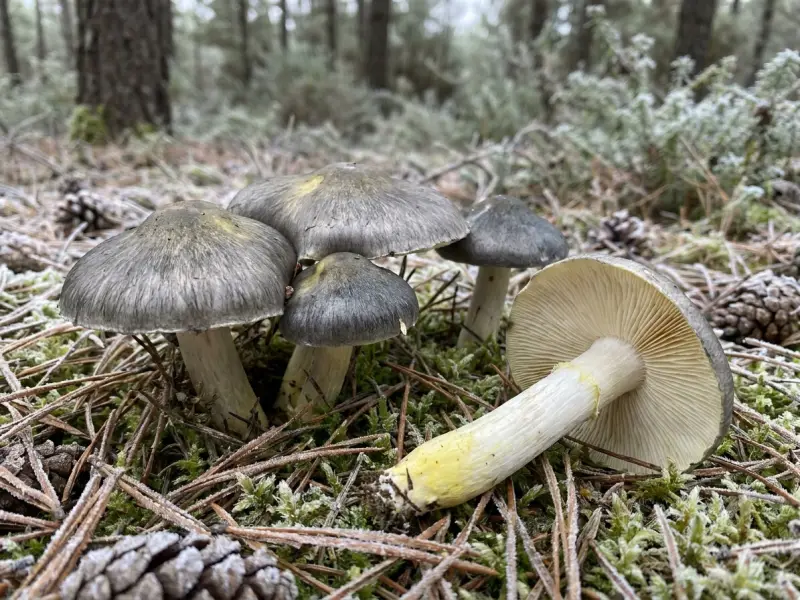
The charbonnier (Tricholoma portentosum) comes out from October to January, at its best in November, in woods of Scots pine, maritime pine, Aleppo pine, black pine and mountain pine, from low ground up to the middle mountains. It is also known as sooty head.
See where it is ready this week
Right now, the best day forecast for charbonniers is 8 November.
The charbonnier is the last good mushroom of the year in the pine woods: it comes up in November and December, with the first frosts, when saffron milk caps and porcini have already gone. Grey, slippery and sweet-fleshed, it is the reward for those who keep going out to the woods when others have stopped.
It wants damp, cold soil and withstands the frosts that kill the others. The map follows it in the pine-wood areas when the soil temperature drops below ten degrees.
What it needs to come out
First, a good rain, the kind that soaks the ground. Then patience: it usually appears after two or three weeks, as long as the soil holds on to that moisture and stays cold, without freezing. If a frost, too much water or a drying wind comes in between, the flush is aborted and never shows.
Where to look
It comes out in woods of Scots pine, maritime pine, Aleppo pine, black pine and mountain pine, from low ground up to the middle mountains, without being fussy about the soil.
Charbonniers by province: Andalusia: Almería, Cádiz, Córdoba, Granada, Huelva, Jaén, Málaga, Sevilla · Aragon: Huesca, Teruel, Zaragoza · Asturias · Basque Country: Álava, Guipúzcoa, Vizcaya · Cantabria · Castile and León: Ávila, Burgos, León, Palencia, Salamanca, Segovia, Soria, Valladolid, Zamora · Castilla-La Mancha: Albacete, Ciudad Real, Cuenca, Guadalajara, Toledo · Catalonia: Barcelona, Girona, Lleida, Tarragona · Extremadura: Badajoz, Cáceres · Galicia: A Coruña, Lugo, Ourense, Pontevedra · Illes Balears · La Rioja · Madrid · Murcia · Navarra · Valencian Community: Alicante, Castellón, Valencia
Charbonniers in Andalusia, province by province
Finding Charbonniers in Almería
We count 134 zones in Almería where charbonniers can come up, between 650 and 1,600 m. The best day this week is 8 November. It looks best near Alcóntar, Ohanes, Abrucena and Fiñana.
Charbonniers season in Cádiz
In Cádiz we follow 5 zones with woodland for charbonniers, between 0 and 250 m above sea level. For now, no zone is ready. The zones with the most woodland lie near Algodonales, Vejer de la Frontera and Barbate.
When to look for Charbonniers in Córdoba
Córdoba has 82 zones with the woodland charbonniers need, from 350 to 700 m. This week the woods are still asleep. Those with the most woodland are near Rute, Palenciana, Benamejí and Villaviciosa de Córdoba.
Charbonniers in Granada: where and when
We count 265 zones in Granada where charbonniers can come up, between 750 and 1,650 m. The best day this week is 8 November. It looks best near Fiñana, Alcóntar, Caniles and Monachil.
Foraging for Charbonniers in Huelva
In Huelva we follow 44 zones with woodland for charbonniers, between 50 and 700 m above sea level. For now, no zone is ready. The zones with the most woodland lie near Jabugo, Aroche, El Cerro de Andévalo and Nerva.
Charbonniers spots in Jaén
Jaén has 265 zones with the woodland charbonniers need, from 550 to 1,450 m. The forecast points to 8 November as the best day of the week. The best placed are near Chilluévar, Segura de la Sierra, Villanueva del Arzobispo and Orcera.
Charbonniers in Málaga
We count 124 zones in Málaga where charbonniers can come up, between 200 and 1,050 m. The best day this week is 8 November. It looks best near Yunquera, Igualeja, Canillas de Aceituno and Ronda.
Where to find Charbonniers in Sevilla
In Sevilla we follow 2 zones with woodland for charbonniers, at about 500 m. For now, no zone is ready. The zones with the most woodland lie near Gilena and Montellano.
Charbonniers season in Aragon
Finding Charbonniers in Huesca
Huesca has 449 zones with the woodland charbonniers need, from 450 to 1,600 m. The forecast points to 8 November as the best day of the week. The best placed are near Castejón de Sos, Montanui, Loarre and el Pont de Suert.
Charbonniers season in Teruel
We count 470 zones in Teruel where charbonniers can come up, between 550 and 1,550 m. The best day this week is 8 November. It looks best near Cedrillas, Villafranca del Cid, Linares de Mora and Alcalá de la Selva.
When to look for Charbonniers in Zaragoza
In Zaragoza we follow 383 zones with woodland for charbonniers, between 300 and 1,000 m above sea level. This week, its best day is 26 October. The zones with the best forecast lie near Ansó, Luesia, Aniñon and Illueca.
Charbonniers in Asturias: where and when
Asturias has 155 zones with the woodland charbonniers need, from 50 to 800 m. The forecast points to 26 October as the best day of the week. The best placed are near Grandas de Salime, Otur, Pola de Allande and Illano.
Where to find Charbonniers in the Basque Country
Foraging for Charbonniers in Álava
We count 86 zones in Álava where charbonniers can come up, between 350 and 950 m. The best day this week is 29 October. It looks best near Villanueva de Valdegovía, La Puebla de Arganzón, Oñati and Eskoriatza.
Charbonniers spots in Guipúzcoa
In Guipúzcoa we follow 30 zones with woodland for charbonniers, between 300 and 1,000 m above sea level. This week, its best day is 26 October. The zones with the best forecast lie near Oñati, Araia, Eskoriatza and Zumarraga.
Charbonniers in Vizcaya
Vizcaya has 46 zones with the woodland charbonniers need, from 50 to 700 m. The forecast points to 26 October as the best day of the week. The best placed are near Mañaria, Zeanuri, Laudio / Llodio and Villasana de Mena.
Where to find Charbonniers in Cantabria
We count 34 zones in Cantabria where charbonniers can come up, between 750 and 1,150 m. The best day this week is 26 October. It looks best near San Martín de Elines, Valdeprado del Río, San Pedro del Romeral and Santiurde de Reinosa.
Charbonniers in Castile and León, province by province
Finding Charbonniers in Ávila
In Ávila we follow 153 zones with woodland for charbonniers, between 600 and 1,500 m above sea level. This week, its best day is 26 October. The zones with the best forecast lie near Hoyocasero, Peguerinos, Hoyos del Espino and Mijares.
Charbonniers season in Burgos
Burgos has 379 zones with the woodland charbonniers need, from 700 to 1,200 m. The forecast points to 31 October as the best day of the week. The best placed are near Vilviestre del Pinar, Canicosa de la Sierra, Hontoria del Pinar and Quintanar de la Sierra.
When to look for Charbonniers in León
We count 453 zones in León where charbonniers can come up, between 800 and 1,550 m. The best day this week is 26 October. It looks best near Peranzanes, Candín, Benuza and Páramo del Sil.
Charbonniers in Palencia: where and when
In Palencia we follow 153 zones with woodland for charbonniers, between 850 and 1,350 m above sea level. This week, its best day is 8 November. The zones with the best forecast lie near Castrejón de la Peña, Buenavista de Valdavia, Alar del Rey and Barruelo de Santullán.
Foraging for Charbonniers in Salamanca
Salamanca has 117 zones with the woodland charbonniers need, from 650 to 1,100 m. The forecast points to 26 October as the best day of the week. The best placed are near El Payo, La Alberca, Navasfrías and San Martín de Trevejo.
Charbonniers spots in Segovia
We count 221 zones in Segovia where charbonniers can come up, between 800 and 1,300 m. The best day this week is 8 November. It looks best near Lozoya, Guadarrama, Cercedilla and Navafría.
Charbonniers in Soria
In Soria we follow 289 zones with woodland for charbonniers, between 950 and 1,350 m above sea level. This week, its best day is 31 October. The zones with the best forecast lie near San Leonardo de Yagüe, Canicosa de la Sierra, Covaleda and Duruelo de la Sierra.
Where to find Charbonniers in Valladolid
Valladolid has 113 zones with the woodland charbonniers need, from 700 to 850 m. This week the woods are still asleep. Those with the most woodland are near Montemayor de Pililla, Pozal de Gallinas, Pedrajas de San Esteban and Portillo.
Finding Charbonniers in Zamora
We count 173 zones in Zamora where charbonniers can come up, between 750 and 1,250 m. The best day this week is 26 October. It looks best near Villardeciervos, Ferreras de Arriba, Mahide and Ríofrío de Aliste.
Charbonniers season in Castilla-La Mancha
Charbonniers season in Albacete
In Albacete we follow 287 zones with woodland for charbonniers, between 600 and 1,300 m above sea level. This week, its best day is 8 November. The zones with the best forecast lie near Riópar, Nerpio, Paterna del Madera and Yeste.
When to look for Charbonniers in Ciudad Real
Ciudad Real has 199 zones with the woodland charbonniers need, from 550 to 950 m. This week the woods are still asleep. Those with the most woodland are near Arroba, Brazatortas, Viso del Marqués and Piedrabuena.
Charbonniers in Cuenca: where and when
We count 433 zones in Cuenca where charbonniers can come up, between 750 and 1,350 m. The best day this week is 26 October. It looks best near Checa, Beteta, Villalba de la Sierra and Tragacete.
Foraging for Charbonniers in Guadalajara
In Guadalajara we follow 338 zones with woodland for charbonniers, between 800 and 1,450 m above sea level. This week, its best day is 8 November. The zones with the best forecast lie near Cogolludo, Atienza, Tragacete and Beteta.
Charbonniers spots in Toledo
Toledo has 143 zones with the woodland charbonniers need, from 500 to 1,000 m. This week the woods are still asleep. Those with the most woodland are near Urda, Torrecilla de la Jara, Puerto Lápice and Rosalejo.
Where to find Charbonniers in Catalonia
Charbonniers in Barcelona
We count 319 zones in Barcelona where charbonniers can come up, between 150 and 900 m. The best day this week is 8 November. It looks best near Berga, Bagà, Montmajor and Campdevànol.
Where to find Charbonniers in Girona
In Girona we follow 216 zones with woodland for charbonniers, between 50 and 1,300 m above sea level. This week, its best day is 8 November. The zones with the best forecast lie near Alp, Campdevànol, Ribes de Freser and Puigcerdà.
Finding Charbonniers in Lleida
Lleida has 344 zones with the woodland charbonniers need, from 450 to 1,750 m. The forecast points to 8 November as the best day of the week. The best placed are near Llavorsí, La Seu d'Urgell, Toloriu and Sort.
Charbonniers season in Tarragona
We count 190 zones in Tarragona where charbonniers can come up, between 100 and 800 m. The best day this week is 7 November. It looks best near Beseit / Beceite, Mas de Barberans, Arnes and Vilaplana.
Charbonniers in Extremadura, province by province
When to look for Charbonniers in Badajoz
In Badajoz we follow 71 zones with woodland for charbonniers, between 400 and 700 m above sea level. For now, no zone is ready. The zones with the most woodland lie near Puebla de Don Rodrigo, Fuenlabrada de los Montes, Siruela and Helechosa.
Charbonniers in Cáceres: where and when
Cáceres has 189 zones with the woodland charbonniers need, from 300 to 1,050 m. The forecast points to 30 October as the best day of the week. The best placed are near Martiago, Pinofranqueado, Mohedas de la Jara and Gata.
Charbonniers season in Galicia
Foraging for Charbonniers in A Coruña
We count 330 zones in A Coruña where charbonniers can come up, between 50 and 450 m. None is ready this week. The widest woods are near Ordes, Coristanco, Carballo and Santa Comba.
Charbonniers spots in Lugo
In Lugo we follow 396 zones with woodland for charbonniers, between 300 and 900 m above sea level. This week, its best day is 27 October. The zones with the best forecast lie near Navia de Suarna, A Rúa, San Román and Taramundi.
Charbonniers in Ourense
Ourense has 264 zones with the woodland charbonniers need, from 350 to 1,150 m. The forecast points to 7 November as the best day of the week. The best placed are near Lubián, Laza, Manzaneda and Riós.
Where to find Charbonniers in Pontevedra
We count 183 zones in Pontevedra where charbonniers can come up, between 50 and 650 m. None is ready this week. The widest woods are near Gondomar, Ponteareas, Rodeiro and Valga.
Finding Charbonniers in Illes Balears
In Illes Balears we follow 172 zones with woodland for charbonniers, between 50 and 400 m above sea level. This week, its best day is 6 November. The zones with the best forecast lie near Mancor de la Vall, Sóller, Cala de Portinatx and Llucmajor.
Charbonniers season in La Rioja
La Rioja has 156 zones with the woodland charbonniers need, from 500 to 1,500 m. The forecast points to 26 October as the best day of the week. The best placed are near Villoslada de Cameros, Cornago, El Royo and Ezcaray.
When to look for Charbonniers in Madrid
We count 91 zones in Madrid where charbonniers can come up, between 650 and 1,600 m. The best day this week is 8 November. It looks best near Gargantilla del Lozoya, Buitrago del Lozoya, Patones and Miraflores de la Sierra.
Charbonniers in Murcia: where and when
In Murcia we follow 260 zones with woodland for charbonniers, between 250 and 1,150 m above sea level. This week, its best day is 8 November. The zones with the best forecast lie near Moratalla, Nerpio, Socovos and Cobatillas.
Foraging for Charbonniers in Navarra
Navarra has 200 zones with the woodland charbonniers need, from 350 to 1,150 m. The forecast points to 26 October as the best day of the week. The best placed are near Isaba, Escároz, Ochagavía and Monreal.
Where to find Charbonniers in the Valencian Community
Charbonniers spots in Alicante
We count 110 zones in Alicante where charbonniers can come up, between 50 and 1,050 m. None is ready this week. The widest woods are near Penáguila, Polop, Fontanars dels Alforins and Benimantell.
Charbonniers in Castellón
In Castellón we follow 175 zones with woodland for charbonniers, between 300 and 1,150 m above sea level. This week, its best day is 7 November. The zones with the best forecast lie near Vistabella del Maestrazgo, Villahermosa del Río, Rosell and Peñarroya de Tastavíns.
Where to find Charbonniers in Valencia
Valencia has 281 zones with the woodland charbonniers need, from 200 to 1,000 m. The forecast points to 8 November as the best day of the week. The best placed are near Utiel, Higueruelas, Alpuente and Aras de los Olmos.
How the forest is doing this week
- Asleep 9962 zones
- Low 10 zones
Forecast of 26 October, updated every day.
Mushrooms that share its woods
- Porcini: The most sought after. Discreet, demanding and fleeting: you have to be there in its week.
- Morel: A honeycomb on a stem. It comes up where nobody expects it and is gone in two weeks.
- Saffron milk cap: The king of the pine woods. Orange, stubborn and generous when its moment comes.
- March mushroom: The one that comes up under the retreating snow. Cold, hidden and among the most sought after of the year.
- Yellowfoot: Small, golden and by the handful in damp pine woods once the cold has arrived.